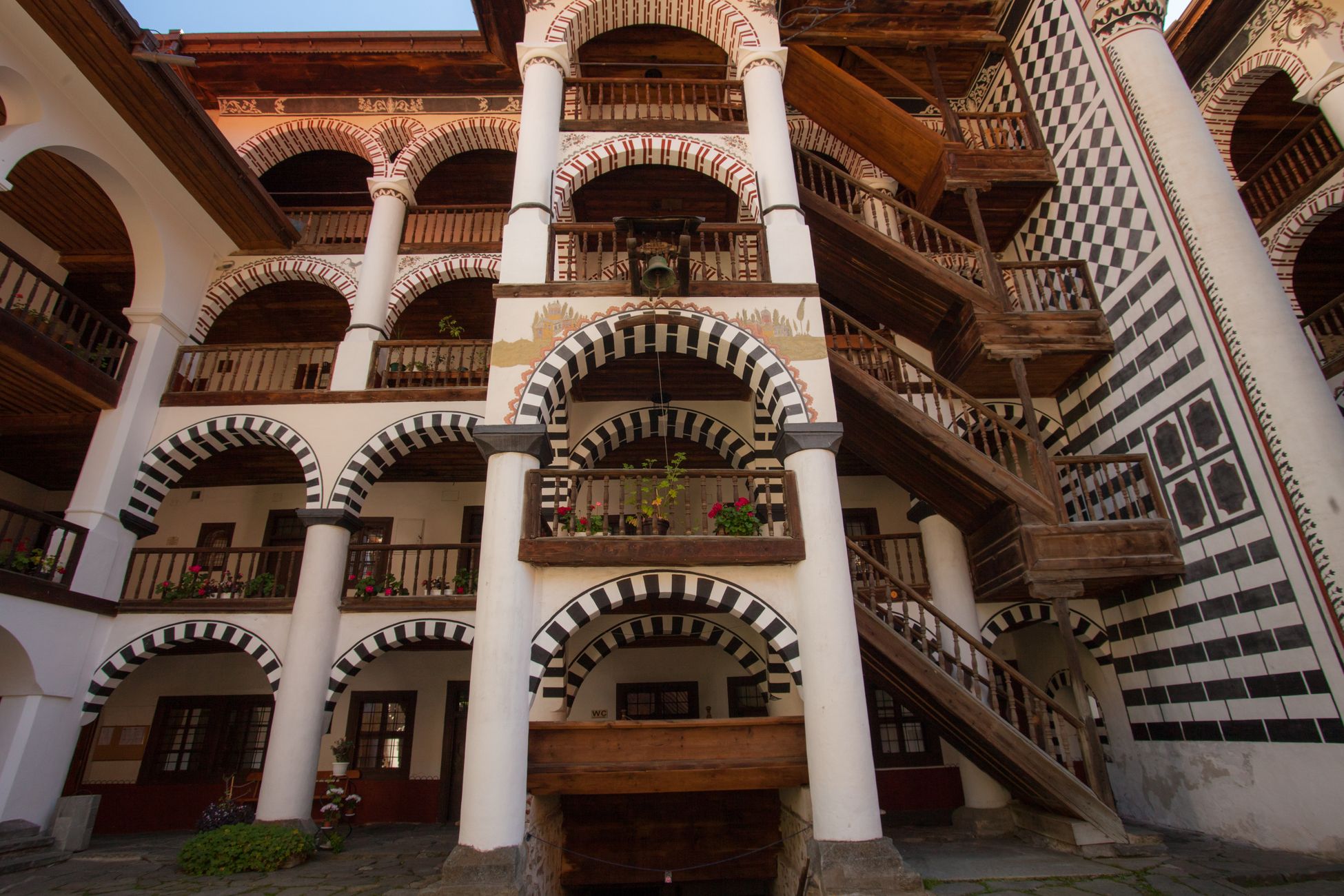
Is Rila Monastery realistic as a day trip from Sofia?
Yes. Rila Monastery is about 120 kilometres south of Sofia, in the Rila mountains, and it works as a one-day trip whether you go by bus, by rental car or with an organised tour. It is a UNESCO site, it was founded in the 10th century and rebuilt after a fire in the 1830s, and it is the trip most Sofia guides put first on the list of places outside the capital.
The honest shape of the day is this: around two hours each way, a few hours on site, and a return to Sofia in the early evening. The road and bus options below all fit that pattern. What changes is how much control you have over your time, which is the real difference between the three ways of going.
If you are still choosing between several excursions, the site's ranking of day trips from Sofia-Grad puts Rila first and Plovdiv second. This article goes into the Rila trip in more detail: <a href="https://www.sofiagotravel.com/blog/best-day-trips-from-sofia/">Best day trips from Sofia-Grad, ranked</a>.
Option 1: the direct bus from Ovcha Kupel
The cheapest way to go without a car is the direct minibus from the Ovcha Kupel bus station on the western side of Sofia. The site's other guides give the same pattern: a departure at 10:20 and a return at 15:00, at about €9 each way, with roughly two and a half hours on the road in each direction. To reach the station, take the metro to the Ovcha Kupel stop and walk for about five minutes.
Two things to plan for. First, the timetable leaves roughly two to four hours at the monastery, so this is the trip for people happy with a focused visit rather than a long day in the valley. Second, in summer the single coach can sell out, so buy your seat at the station kiosk a day ahead. Timetables and fares change by season, so confirm the departure time and the return time when you buy the ticket, and make sure you know exactly where the return bus leaves from before you walk around the complex.
The alternative on public transport is a bus to Rila town followed by a taxi up to the monastery. It is possible, but it is more complicated and less predictable than the direct service, and it only makes sense if the direct bus is not running on your day.
Option 2: driving yourself
A rental car gives you the most freedom. The drive takes about 90 minutes to 2 hours depending on traffic. Take the E79 south out of Sofia and turn off at Kocherinovo, then follow the signs up the valley. The last stretch is a mountain road through the forest, so allow extra time in winter, when snow can affect the higher sections.
Daily rental rates quoted in the site's day-trip guide are in the range of €26 to €35 for a small car, plus fuel. Rent the car on the morning you leave the city rather than for the whole stay. Parking in the centre of Sofia is paid and hard to find, and the trip to Rila is the one occasion where a car clearly earns its cost.
Driving also lets you add a stop on the way. The walk up to the tomb of Ivan Rilski above the monastery takes about 40 minutes, and most organised tours skip it. You can also stop for trout at one of the small restaurants in the valley below the complex. Pack cash, because many small places in the area do not take cards.
If you would rather sleep outside the centre before an early start, hotels on the south-western side of the city, and in Bankya, put you on the road to the motorway without crossing the middle of Sofia. The guide to the spa town is here: <a href="https://www.sofiagotravel.com/blog/bankya-spa-town-guide-sofia/">Bankya area guide: Sofia's spa town</a>.
Option 3: an organised day tour
Organised tours collect you from central hotels, usually at around 8:00 in the morning, and bring you back by the afternoon or early evening. Tour operators run the trip daily from April to late October. Prices quoted across the site's guides vary from about €26 to €43 per person for a shared tour, and more for a private driver, so ask exactly what is included before booking: entry to the museum, lunch and whether the tour also stops at Boyana Church.
The trade-off is simple. A tour removes every decision and is easy with luggage or a tight schedule, but it fixes your hours at the monastery and usually skips the walk above the complex. If you want to see Rila and stay flexible, a car is better. If you want the lowest cost and do not mind a fixed timetable, the direct bus is better.
What to see once you arrive
The monastery is a walled complex in a river valley, surrounded by peaks above 2,000 metres and pine forest, at about 1,147 metres above sea level. Entry to the grounds and the church is free. The main courtyard is framed by arcades with black-and-white striped arches and wooden balconies, and the church in the middle is covered inside and out with frescoes. The 19th-century paintings were made by Zahari Zograf and his team in the 1840s, and they mix biblical scenes with medieval Bulgarian rulers and scenes of judgement.
Allow time for the church interior, the courtyard galleries and the museum. The museum charges a small entry fee, given in the site's guides as a few euros, and it is where the carved wooden cross associated with the monk Rafail is kept. Candles in the church cost about €1. Dress as you would for any working Orthodox church, with shoulders and knees covered.
On a bus day, decide your order before you start. See the church and courtyard first, then the museum, then eat, and keep a margin of at least 20 minutes before the return departure. The two restaurants near the monastery gate serve grilled meat and shopska salad, and the site's guides put a lunch at roughly €7 to €10. Some visitors prefer to bring food and use the short forest trail behind the complex, which leads to a mountain spring.
When to go and what to pack
Rila can be visited all year, but conditions differ a lot. Late spring and early autumn combine green valley scenery with smaller crowds than high summer. Weekends bring domestic day-trippers, and the car park can fill by about 11:00, so go on a weekday if you can. From November to March there is snow around the monastery, the higher road can be slower, and it is worth checking the weather and the bus timetable the day before.
Temperatures drop quickly with altitude, and afternoon thunderstorms can develop in summer. Bring a warm layer and a waterproof jacket even if Sofia is hot, sturdy shoes for cobbles, cash for the museum, candles and lunch, and a fully charged phone with an offline map. Signs near the monastery include English, and printed English guides are available at the entrance.
Access and who this trip suits
The trip suits most ages, but it is a long day for small children because of the two hours each way. For wheelchair users and anyone with limited mobility, the courtyard has uneven cobblestones and the church has a step at the entrance, so it is doable but not easy. The site's accessibility guide covers this in more detail: <a href="https://www.sofiagotravel.com/blog/sofia-accessibility-honest-guide/">Accessibility in Sofia: an honest guide for wheelchair and mobility travel</a>.
Do not try to combine Rila with the Seven Rila Lakes on the same day unless you are a confident hiker with your own car. The lakes need a chairlift that runs in summer and a walk, and they are a separate trip in their own right.
Where to stay before and after the trip
For a bus or a tour, sleep close to the pick-up point. Hotels near the Central Railway Station and Central Bus Station in Vazrazhdane put you beside the main transport hub, and the metro at Serdika is two stops away. The site has a guide to that part of the city: <a href="https://www.sofiagotravel.com/blog/where-to-stay-near-sofia-central-station-and-bus-station/">Where to Stay Near Sofia Central Station & Bus Station</a>.
For a drive, pick a base that avoids the city centre in the morning. Lozenets and Bankya are easier to leave by car than Sredets or Oborishte. You can compare hotels in any of these districts on SofiaGoTravel.com by dates, location and total price, and book through the same page.
A simple plan for the day
By bus: metro to Ovcha Kupel, the 10:20 departure, arrival around 12:30, church and courtyard first, museum and lunch next, and the return bus at 15:00 with a margin. You are back in Sofia in the early evening.
By car: leave Sofia at about 8:00, reach the monastery before the coach parties, spend three hours on site including the walk above the complex if the weather allows, eat in the valley on the way back, and return before dark.
By tour: confirm pick-up time and what is included, bring cash, and use the time you are given at the monastery to do the church first.
Questions, answered
How far is Rila Monastery from Sofia?
About 120 kilometres south of Sofia. By car it takes roughly 90 minutes to 2 hours, and the direct bus takes about two and a half hours each way.
Can I get to Rila Monastery by public transport?
Yes. The site's guides describe a direct minibus from the Ovcha Kupel bus station at 10:20 with a return at 15:00, at about €9 each way. Check the current timetable and buy your seat a day ahead in summer.
Is Rila Monastery free to enter?
Entry to the grounds and the church is free. The museum has a small separate fee, and candles in the church cost about €1.
Is one day enough for Rila Monastery?
Yes, for the monastery itself. Two to four hours on site cover the church, the courtyard and the museum. The Seven Rila Lakes are a separate trip.
Doing good is the business: every booking through Stay Sofia funds one verified tonne of carbon removal — same room, same price, no markup.
Start your search