Neighbourhood picks
Sofia Neighborhood Guide: Where to Stay in 2026
From the leafy boulevards of Lozenets to the cobbled charm of the Old Town, each Sofia district offers a distinct flavour of Bulgaria's capital—here's how to pick the right base for your trip.
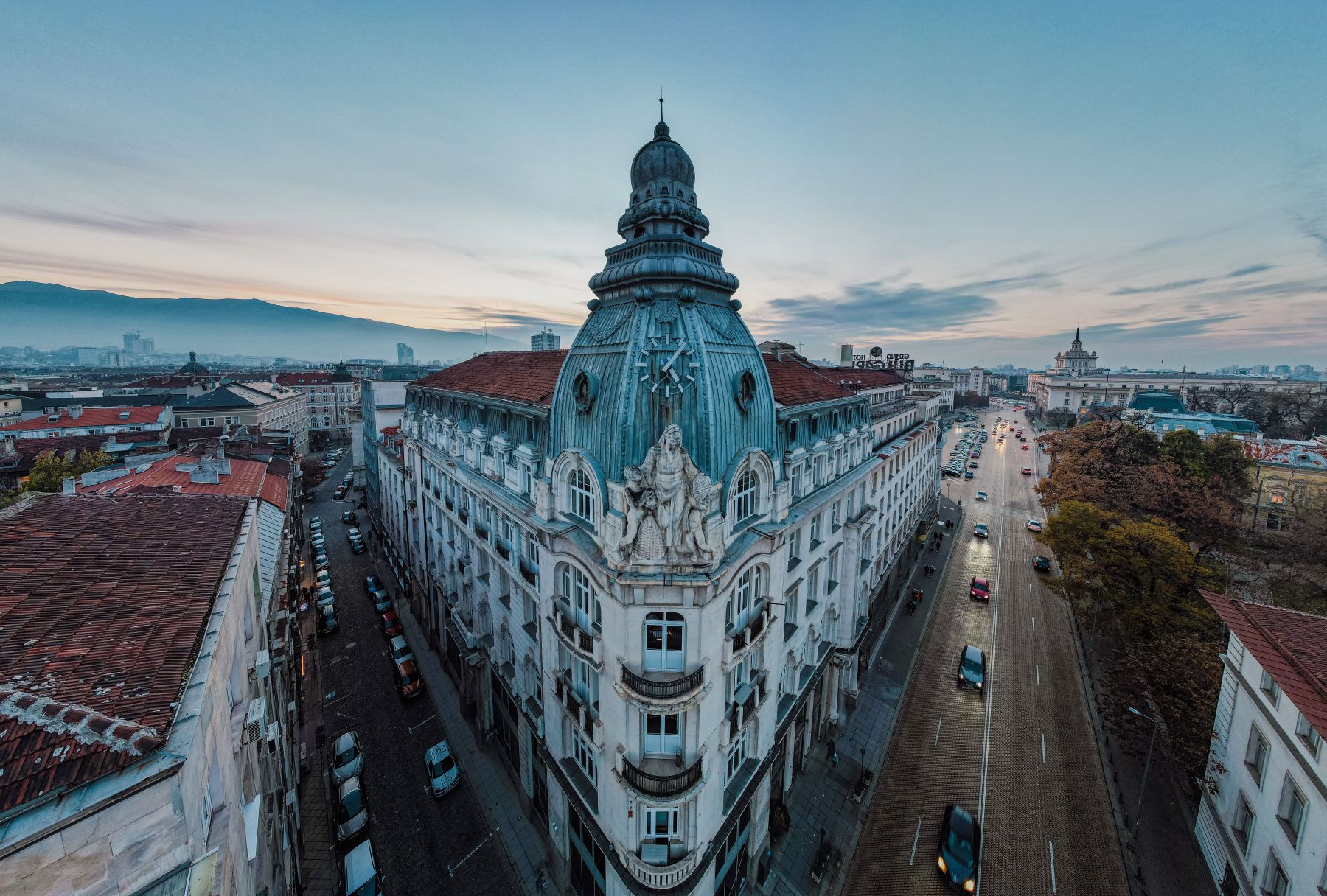
The Centre: Museums, Metro and Main Sights Within Walking Distance
The Centre district wraps around Vitosha Boulevard and extends east to the National Palace of Culture, putting you within fifteen minutes' walk of Alexander Nevsky Cathedral, the National Art Gallery and the Ivan Vazov Theatre. Most international visitors searching for Sofia hotels land here first because the yellow Metro line runs underneath, linking you to the airport in thirty-five minutes and the bus station in ten. Streets like Graf Ignatiev and Patriarch Evtimiy are lined with bookshops, cafés serving banitsa and pastry counters that stay open past midnight. The pedestrianised stretch of Vitosha itself feels like a permanent parade—street musicians, flower stalls and crowds spilling out of gelato bars even in February.
Hotels here range from compact three-star properties around seventy to ninety euros a night to design-led boutiques closer to one hundred and thirty. You'll pay a premium for a room overlooking the boulevard, but side-street addresses are quieter and still walkable to everything. The neighbourhood gets loud on Friday and Saturday nights, especially near the junction with Patriarch Evtimiy, so request an upper floor or courtyard-facing room if you're a light sleeper. If you're in Sofia for a long weekend, prioritise the Centre—you'll spend less on taxis and more time actually seeing the city.
The drawback is density. In summer the pavements throng with tour groups, and finding a table at a decent mehana after seven in the evening takes either a reservation or patience. The Centre also skews transactional: souvenir shops outnumber independent boutiques, and many restaurants print menus in five languages with prices to match. But for a first visit or a short stay, the convenience outweighs the crowd. You can walk to Borisova Gradina park for a morning jog, catch an evening at the Opera, and still have energy left to explore the flea market behind Alexander Nevsky on Sunday.
Lozenets: Residential Calm with Cafés, Parks and Easy Tram Links
Lozenets lies south of the centre, bordered by the South Park to the west and Bulgaria Boulevard to the east, and it feels like a neighbourhood where people actually live rather than just pass through. Tree-lined streets—Tikveshka, Cherni Vrah, Nikola Vaptsarov—are dotted with low-rise apartment blocks from the nineteen-seventies and eighties, interspersed with modern bakeries, yoga studios and wine bars that fill up with young professionals on weekday evenings. Tram nine runs along Bulgaria Boulevard and connects you to the centre in about twenty minutes; tram five takes you west to the National Palace of Culture. The South Park itself is Sofia's green lung—joggers, dog walkers and families with prams at all hours, plus an outdoor pool complex that opens in June.
Accommodation here leans toward aparthotels and small guesthouses rather than branded chains, with nightly rates typically ten to twenty euros lower than equivalent Centre properties. You'll find studios with kitchenettes, which makes sense if you plan to stay a week or pick up fresh produce at the Lozenets market on Wednesday and Saturday mornings. The trade-off is distance: you're not stumbling back from a late dinner on Vitosha Boulevard in five minutes, and rideshares from the airport cost a few euros more. But if you value morning coffee without a tour group at the next table and an evening stroll that doesn't involve sidestepping restaurant touts, Lozenets delivers.
The neighbourhood also places you closer to Vitosha Mountain. The Simeonovo gondola lift sits about four kilometres south, reachable by car in ten minutes or a combination of tram and bus in thirty. In winter that means easy access to the ski runs at Aleko; in summer it's hiking trails through beech and spruce forest. Locals treat Lozenets as the gateway to the mountain, so you'll see more sports shops and outdoor-gear rental places than postcard racks. Book here if you're splitting your trip between city sightseeing and mountain time, or if you simply prefer a residential vibe over a tourist one.
Oborishte and the Doctors' Garden: Quiet Streets and Golden-Age Architecture
Oborishte sits northeast of the Centre, running roughly from the Central Military Club up to Orlov Most—Eagle Bridge—and across to the Doctors' Garden. The district takes its name from the nineteenth-century revolutionary assembly held here, and it retains an air of old Sofia: wide pavements, wrought-iron balconies, façades painted in ochre and pistachio. The Doctors' Garden itself is a small park with fountains, benches and enough shade to make it a genuine refuge in July and August when temperatures push past thirty-three degrees. Tsar Osvoboditel Boulevard cuts through the neighbourhood, lined with embassies, the former royal palace and the National Gallery for Foreign Art, which houses a surprisingly strong collection of Asian and African pieces.
Hotels and guesthouses in Oborishte are often family-run conversions of old townhouses, with breakfast served at a communal table and owners who'll sketch walking routes on a paper map. Expect to pay sixty to ninety euros a night, sometimes less if you book directly. The area is quiet after dark—residential rather than nightlife-focused—so it suits couples, solo travellers and anyone who wants to read a book in a park without a hawker trying to sell them a selfie stick. You're still only a fifteen-minute walk to the National Theatre and the Presidency, and the number nine tram from Orlov Most reaches the centre in ten minutes.
The main reason to stay here is atmosphere. Oborishte has managed to dodge both the over-renovation of the Centre and the concrete sprawl of the outer suburbs; it feels like a neighbourhood that hasn't yet noticed it's on the tourist map, which means bakeries that sell bread to locals rather than croissants to visitors, and corner cafés where the menu is handwritten in Bulgarian only. If you're comfortable navigating without English signage everywhere and you value architectural charm over convenience, Oborishte is the right pick. Just note that restaurant options thin out fast once you stray east of Tsar Osvoboditel, so plan to walk back toward the centre for dinner or stock your room with supplies from the Fantastico supermarket on Vasil Levski.
Studentski Grad: Budget Beds and a Younger Crowd Near the Ring Road
Studentski Grad—Student Town—sprawls along the city's southern edge near the ring road, built in the nineteen-sixties to house university students and still serving that function today. It's a land of tower blocks, twenty-four-hour convenience stores, cheap beer and late-night shawarma joints that do a roaring trade after the clubs close. The area isn't picturesque, but it's affordable: hostels and budget hotels charge forty to sixty euros a night for doubles, sometimes including breakfast, and you can find studio apartments on booking platforms for even less if you're staying a week. Trams five and nine connect you to the centre in about thirty minutes, and marshrutka minibuses run more frequently but with routes that make sense only to locals.
If you're under thirty, travelling solo or in a group, and your Sofia itinerary includes clubbing—Apartment Club, Terminal One, Yalta—then Studentski Grad puts you close to the action. The neighbourhood also has a couple of large shopping malls, including The Mall on Tsarigradsko Shose, with a cinema, supermarket and food court. But there's little reason to stay here if you're not chasing nightlife or rock-bottom prices. The walk to anywhere genuinely interesting takes at least forty minutes, and the streets lack the charm of Oborishte or the energy of the Centre. It's functional, not atmospheric.
One advantage is proximity to the E80 motorway if you're planning day trips east to Plovdiv or west to the Rila Monastery. Rental-car depots cluster near the ring road, and you can be out of the city and onto open road within fifteen minutes in the morning. Studentski Grad also offers more parking than central neighbourhoods, often free on side streets, which matters if you're driving in from another part of Bulgaria and need somewhere to leave the car for a few days. So treat it as a base camp rather than a destination: sleep cheap, park easy, then spend your days elsewhere.
Boyana and Dragalevtsi: Mountain Air and Villa Quiet at the City's Edge
Boyana and Dragalevtsi cling to the lower slopes of Vitosha Mountain, about eight to ten kilometres south of the city centre, and they feel more like alpine suburbs than urban neighbourhoods. Boyana is famous for the Boyana Church, a UNESCO-listed medieval gem with thirteenth-century frescoes that art historians describe as proto-Renaissance, and the National History Museum, housed in the former Zhivkov residence. Dragalevtsi sits slightly higher and is the starting point for several hiking trails, including the path to Boyana Waterfall and the route up to Cherni Vrah, Vitosha's highest peak. In winter the Simeonovo and Vitosha ski lifts are a ten-minute drive, making these neighbourhoods popular with skiers who want to avoid the queues at Bansko.
Hotels here are fewer and pricier—think four-star spa properties and boutique lodges charging one hundred and twenty to one hundred and eighty euros a night—but you're paying for clean air, garden terraces and silence. There's no metro, so you'll rely on a car, taxi or the infrequent number sixty-four bus to reach the centre, a journey that takes forty minutes in good traffic and closer to an hour during the morning rush. Restaurants are sparse: a handful of mehanas serving grilled meats and mountain trout, plus a couple of upscale places popular for Sunday lunch. If you're the sort of traveller who wants to wake to birdsong, go for a morning hike, then drive into the city for museums and dinner, Boyana and Dragalevtsi are ideal. If you want to stroll to a bar at eleven at night, they're not.
These neighbourhoods also attract long-stay visitors and remote workers who value greenery and quiet over nightlife. Villa rentals are common, often with fireplaces, balconies and views across the city to the Balkan range in the distance. Autumn—September and October—is especially beautiful here: the beech forests turn gold and rust, the air smells of woodsmoke, and the hiking trails are busy with locals gathering mushrooms. If your Sofia trip includes a mountain component—skiing, hiking or simply wanting to breathe something other than city air—consider splitting your stay between a central hotel for sightseeing and a few nights up in Boyana or Dragalevtsi for recovery and nature.
Practical Tips for Booking and Getting Around Sofia's Districts
Sofia's public transport is cheap and reasonably efficient: a single Metro, tram or bus ticket costs one lev—about fifty euro cents—and you can buy day passes for four leva. The Metro has four lines, though only the red M1 and blue M2 see much tourist use; the M1 connects the airport to the centre and runs from around five in the morning until midnight. Trams are slower but cover more ground, especially useful for reaching Lozenets and the South Park. Taxis are metered and inexpensive—expect six to ten leva for a cross-town ride—but use an app like Taxi Me or bolt to avoid the rare driver who spots a foreign accent and takes a scenic route. If you're staying outside the centre, check Google Maps for the nearest tram stop or Metro station before you book; a five-minute walk can become twenty minutes if you don't know the shortcuts.
Seasonally, Sofia is pleasant from April through October, with May and September offering the best balance of mild weather and manageable crowds. July and August get hot—low thirties Celsius—and many locals decamp to the coast or the mountains, leaving the centre quieter but also a bit lifeless. Winter—December through February—brings snow, grey skies and temperatures often below freezing, but also cheaper hotel rates and the chance to ski Vitosha without the Bansko queues. Christmas markets appear in the Centre and around the NDK in late November, and New Year's Eve on Vitosha Boulevard draws thousands for fireworks and open-air concerts. Book early for December and late June through August; shoulder months offer better deals and shorter queues at the major museums and churches.
Questions, answered
Which Sofia neighbourhood is best for first-time visitors?
The Centre district is the most practical choice for a first visit. You're within walking distance of Alexander Nevsky Cathedral, the National Theatre, Vitosha Boulevard and the Metro, which means less time navigating public transport and more time sightseeing. Hotels range from mid-budget to upscale, and you'll find English menus and tourist infrastructure everywhere. The trade-off is crowds and noise, but for a short trip the convenience outweighs the downsides.
Is it worth staying near Vitosha Mountain instead of central Sofia?
If skiing, hiking or mountain air is a priority, then Boyana or Dragalevtsi makes sense—you're fifteen minutes from the Simeonovo lift and close to trailheads. But you'll need a car or budget for taxis, and evening restaurant options are limited. A good compromise is splitting your stay: a few nights in the Centre for sightseeing, then a couple of nights up the mountain for outdoor activities and quiet.
How much does a decent hotel cost in Sofia's central neighbourhoods?
Expect to pay seventy to one hundred and thirty euros a night for a three- or four-star hotel in the Centre or Oborishte, with prices rising in summer and around Christmas. Lozenets and residential areas are ten to twenty euros cheaper, while Studentski Grad budget options start around forty euros. Booking directly with smaller guesthouses often brings the rate down, especially if you're staying more than three nights.
Are Sofia's trams and Metro easy to use for tourists?
Yes. The Metro is clean, frequent and has signs in both Cyrillic and Latin script; the M1 red line from the airport to the centre is especially straightforward. Trams cover more of the city but can be crowded during rush hour. Buy tickets from machines or kiosks before boarding—inspectors are common and fines are immediate. A day pass costs four leva and is worth it if you're making more than four journeys.
What's the best time of year to visit Sofia and book a hotel?
May and September offer the best weather—warm but not sweltering—and fewer crowds than peak summer. Hotel rates are moderate, and you can walk the city comfortably without melting or freezing. December is popular for Christmas markets but cold and dark; July and August are hot, and many locals leave town. Book at least a month ahead for late spring and early autumn to secure better rates and locations.
Doing good is the business: every booking through Stay Sofia funds one verified tonne of carbon removal — same room, same price, no markup.
Start your search