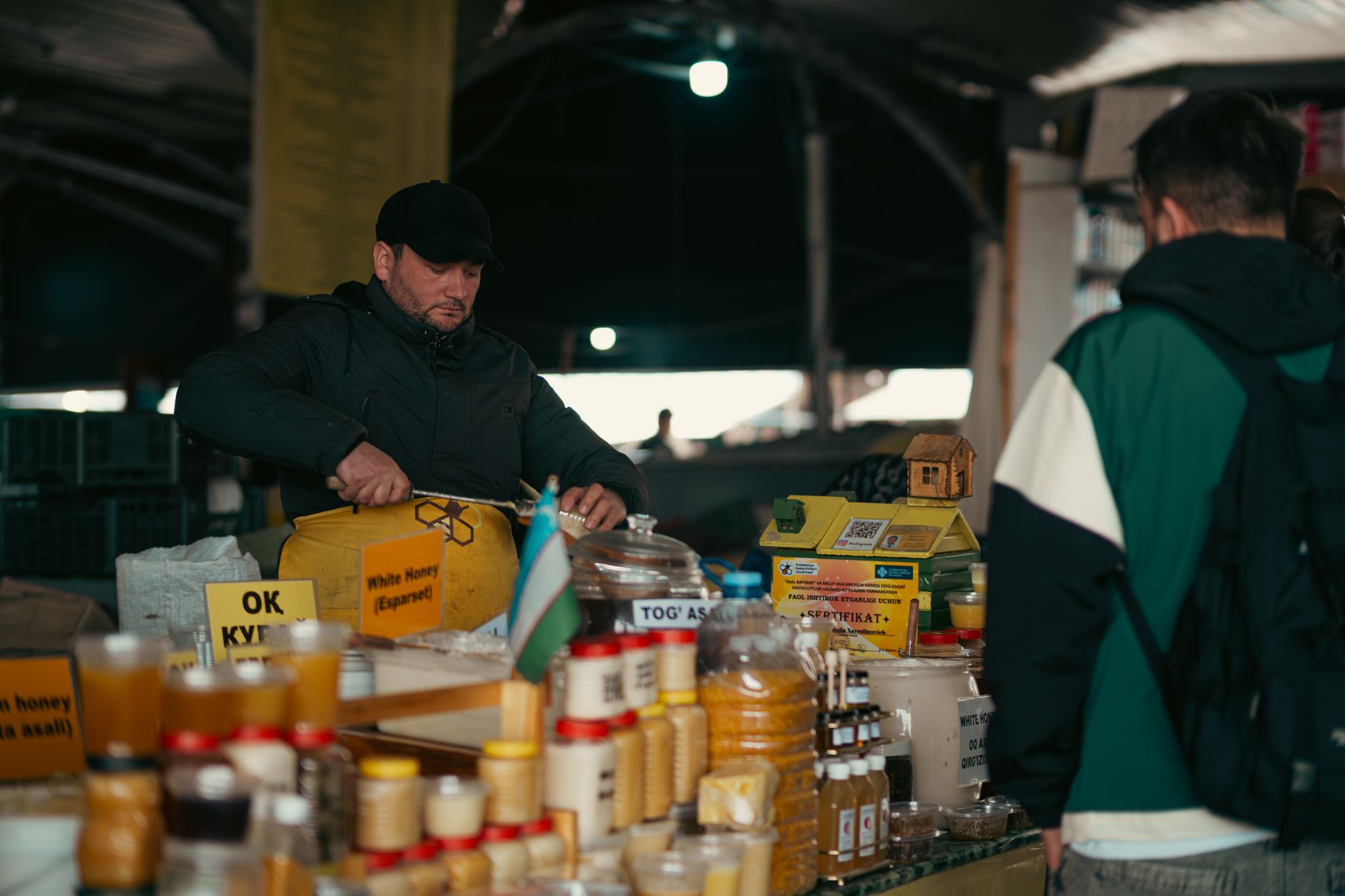
Zhenski Pazar
The women's market on Stefan Stambolov, a 400m stretch of open-air stalls open 7am-7pm daily. Fruit, vegetables, dried beans, roast peppers, jarred lyutenitsa, cheap grilled kebapche stands and Middle Eastern spice sellers. Bulgarian tomatoes in July-September are the reason to come — a kilo for €2, still warm from the truck. Cash only for most stalls. The market takes its name from a nineteenth-century tradition of women selling home produce here, and it still feels more domestic than commercial — sellers call out prices in Bulgarian, not English, and haggling over a few stotinki is normal rather than rude.
Walk the full length rather than stopping at the first stalls near Hristo Botev Boulevard, where prices run higher for the tourists passing through; both quality and value improve past the halfway point toward Ilinden. Nearer Lion's Bridge you will find vendors selling cheap clothing and phone cases alongside the food stalls — fine for a browse, not the reason to visit. Avoid the counterfeit trainers and bags sold from blankets on the side streets; police periodically clear them and stallholders scatter within minutes. Go early on a Saturday, by 8am, before the tour groups from Vitosha Boulevard arrive and the best peppers and tomatoes sell out.
Tsentralni Hali (Central Market Hall)
The grand covered market on Maria Luiza Boulevard, 1911 building. Two floors: ground floor is food (cheeses, deli, wines, banitsa counter), basement is a supermarket. Try Skaptoburger for lunch (€7), Boyar's Bulgarian cheese counter for a €4 tasting of sirene and kashkaval, and the honey stall for jars of buckwheat and Rhodope pine honey (€5). Card accepted, tourist-friendly, open 7am-10pm. The building itself is worth a slow look — a restored early-twentieth-century hall facing the Banya Bashi Mosque and the Sofia Synagogue across the boulevard, one of the few stretches of the city where a mosque, a synagogue and an Orthodox church stand within sight of one another.
The basement supermarket is useful for bottled water, snacks and a bathroom stop rather than a destination in itself; stick to the ground floor for anything worth carrying home. Expect higher prices than Zhenski Pazar for near-identical produce — you are paying for card machines, air conditioning and staff who speak English. The hall gets a steady trickle of tour groups through the morning, but it never feels as overrun as the souvenir stretch of Vitosha Boulevard nearby. If you only have time for one market in Sofia and want everything under one roof with no language barrier, this is the one to pick.
Saturday farmers' market at Rimska Stena
Every Saturday 8am-2pm at Rimska Stena in Lozenets. Small, organic, and where Sofia's food scene chefs shop. Producers bring goat cheese from the Rhodopes, mountain honey, home-pressed rakia (sold as "herbal extract" for legal reasons, €7 a small bottle), and seasonal produce. A good place to pick up gifts if you cannot face another rose-oil souvenir shop. Stalls set up along the park path near the fragment of Roman wall that gives the market its name, and the whole thing is small enough to cover in twenty minutes — arrive with cash and no fixed shopping list, since what turns up changes from one week to the next.
This is not a market built for tourists, and there is little signage in English, so pointing and smiling gets you further than trying to explain what you want. Bread from small bakeries in the Rhodope and Rila regions tends to sell out by 10am most weeks, so come early if that is the draw. Expect fewer stalls and shorter hours in December and January, when several producers stop travelling into the city for the winter. It sits a fifteen-minute walk from NDK, the National Palace of Culture, so pair it with a coffee on Vitosha Boulevard afterwards rather than making a special trip across town for it alone.
What to buy home
Bulgarian rose oil (real, from Refan or Bulgarian Rose flagship, €13-€22 for a small vial), Rhodope pine honey (€5), a jar of lyutenitsa (€3), banitsa filo ready to bake (€3), Melnik wine (€7-€13). Skip mass-produced fridge magnets and rakia in tourist packaging — buy rakia from a producer stall for a third of the price. Pack jars and bottles in checked luggage wrapped in clothing rather than hand luggage, since liquids over 100ml are confiscated at security regardless of how carefully they are sealed. A bottle of Melnik wine or a jar of lyutenitsa weighs little and rarely breaks if wrapped well.
Vacuum-packed sirene and kashkaval from Tsentralni Hali travel better than anything bought loose at Zhenski Pazar, since the packaging is built to survive a flight. Check your destination country's rules before packing dairy or honey — there are no restrictions moving within the EU, but the US, UK and Australia all limit or ban certain dairy and meat imports from outside their borders. If customs is a worry, stick to shelf-stable items: jarred lyutenitsa, dried herbs, rose products and bottled rakia all travel with no restrictions anywhere. Budget an extra €20-€30 for gifts if buying for more than two or three people, since small jars add up fast.
Getting between the markets
Zhenski Pazar and Tsentralni Hali are about a fifteen-minute walk apart, both reachable on foot from Serdika metro station on the M1/M2 line, which sits almost directly beneath the Central Market Hall. Trams 20 and 22 run along Maria Luiza Boulevard past Tsentralni Hali if you would rather not walk in summer heat. Rimska Stena is a different trip entirely, on the other side of the centre in Lozenets — take the metro to NDK station and walk south, or a taxi from the centre for around €4-€6. Doing all three in one day is possible but rushed; pair Zhenski Pazar with Tsentralni Hali in the morning and save Rimska Stena for the following Saturday if your trip runs that long.
Best time to visit, and what to skip
Weekday mornings, roughly 8am-11am, are the best time to see Zhenski Pazar working rather than performing for tourists — stallholders are restocking, prices are fresh, and there is none of the afternoon scrum around the kebapche grills. Saturday is busiest at all three markets and gives the widest choice of produce, but expect crowds and slower service everywhere. Avoid Tsentralni Hali on Sunday afternoons, when several stalls close early and the basement supermarket becomes the only reliable option left. Skip the souvenir stalls clustered at the Vitosha Boulevard end of the centre entirely — the rose-oil vials sold there are usually coloured, scented glycerine rather than real oil, at three or four times what you would pay from Refan or a Rimska Stena producer.
Street food and drinks worth trying
Kebapche — a grilled minced-meat roll, usually pork and beef, served with bread and raw onion — costs around €2-€3 from a Zhenski Pazar grill stand and is the closest thing Sofia has to fast food. Banitsa, a flaky filo pastry filled with sirene and egg, is sold warm from a paper bag at Tsentralni Hali for €1.50-€2 and is the standard Bulgarian breakfast. Boza, a thick, faintly sweet fermented grain drink, turns up at a handful of Zhenski Pazar stalls in small unmarked bottles — it is an acquired taste and most visitors manage one sip and stop, but it is worth trying once. On a hot day, reach for ayran, a salted yoghurt drink, rather than bottled water; it is what most locals actually drink.
Questions, answered
When is Zhenski Pazar open?
Daily 7am-7pm. Busiest and best-stocked on Saturday mornings.
Is Central Market Hall touristy?
Partly. But the cheese and honey stalls are the real deal, and Skaptoburger is a favourite of Sofia locals.
Where do I buy real Bulgarian rose oil?
Refan and Bulgarian Rose stores on Shishman and Graf Ignatiev. Avoid Vitosha Boulevard souvenir shops selling coloured water.
Can I bring cheese back home?
Vacuum-packed white sirene lasts 3-4 days out of fridge. Check your country's import rules for dairy.
Is Rimska Stena market open in winter?
Yes, but with fewer stalls and shorter hours than in summer. Several producers stop travelling into Sofia in December and January, so expect a smaller selection of cheese and honey and almost no fresh produce. If cheese and honey are the goal rather than a full market experience, it is still worth the trip.
Do the markets take cards?
Tsentralni Hali takes cards throughout. Zhenski Pazar and the Rimska Stena farmers' market are almost entirely cash-only, so bring Bulgarian lev in small notes before you go. There are ATMs on Stefan Stambolov near Zhenski Pazar if you run short.
Doing good is the business: every booking through Stay Sofia funds one verified tonne of carbon removal — same room, same price, no markup.
Start your search