Spiritual Sites
Dragalevtsi Monastery
A 14th-century mountain monastery on the slopes of Vitosha, hideout of rebel Vasil Levski and one of the most peaceful spots within Sofia's city limits.
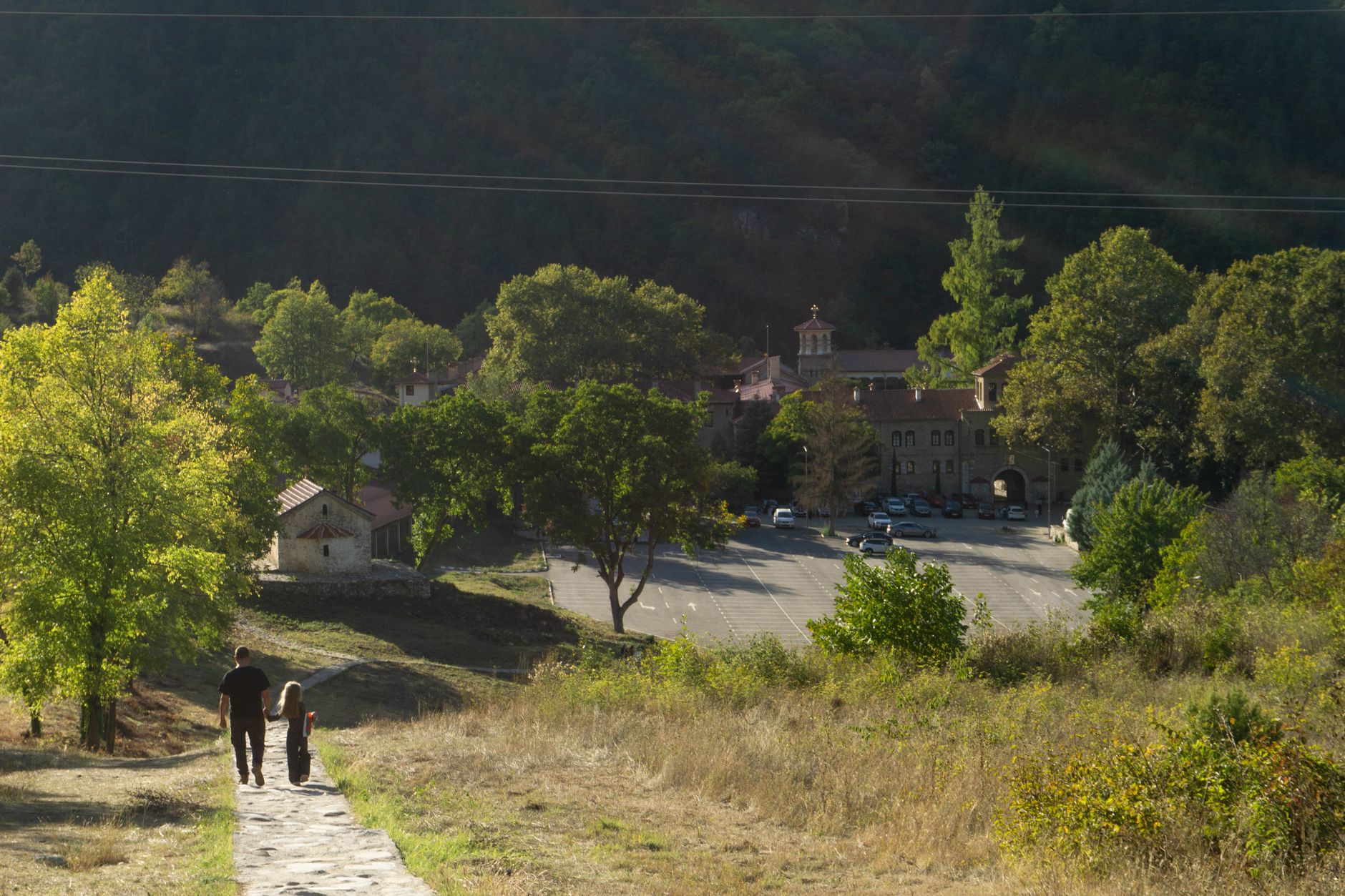
The Dragalevtsi Monastery of the Holy Mother of God of Vitosha was founded in 1345 by Bulgarian Tsar Ivan Alexander, abandoned after the Ottoman conquest, and refounded around 1476 — making its small stone church one of the very few Bulgarian medieval religious buildings that survived the early Ottoman period intact. The frescoes inside the church date from 1476 and are unrestored: dark, smoky, beautiful, and include a portrait of the donor Radoslav Mavar and his family kneeling before Christ. In the 1870s the monastery became a hideout for the Bulgarian revolutionary Vasil Levski, and a small museum on the grounds tells his story.
You reach it up a narrow forested road that climbs sharply out of Dragalevtsi village on the lower slopes of Vitosha. The monastery is a walled compound of white cells with wooden balconies around a courtyard shaded by walnut trees. The old church sits at the far end, tiny and low — you almost duck through the door. A handful of nuns still live here; they grow herbs, sell honey from monastery hives (€5 a jar), and keep bees, chickens and one very old cat. In the courtyard, a spring runs cold from a marble tap.
This is the walk-plus-monastery day locals do. From central Sofia, take the metro to Vitosha, then bus 66 to Dragalevtsi village, then either walk up (30 minutes, forested road) or take the Dragalevtsi chairlift (weekends only, €5 return) to Bai Krastyo and hike down. Combine with a lunch at one of the mehanas in Dragalevtsi village — Vodenitzata is the classic. In autumn the walnut trees drop and the whole courtyard smells of leaves. Winter mornings are for enthusiasts; snow reaches waist-deep off the path.
The visit has a fixed shape and it is short. Through the arched gate you are in the courtyard: cells on two sides, the spring in the northwest corner, flower beds the nuns weed constantly. The church takes fifteen to twenty minutes if you do it properly — step in, stand still, and give your eyes two full minutes to adjust before you look at anything, because there is no electric lighting and the 1476 paint reads as brown mud until your pupils open. Work the lower register of standing saints first, then the donor group, then the darker upper scenes. The Vasil Levski memorial room across the yard is five minutes: panels, copies, a few objects, captions mostly in Bulgarian. Buy a candle from the box by the door, fill a bottle at the spring, and be honest that an hour inside the walls is generous.
Getting here from the centre is one metro ride and one bus. Take M2 south to Vitosha, the line's terminus, for about €0.80 on a single ticket; from the station it is roughly a ten-minute walk down Cherni Vrah Blvd to the Hladilnika terminal, where bus 66 leaves for the mountain every thirty to forty minutes, more often at weekends. Get off in Dragalevtsi village, walk past the last houses and keep going up the asphalt road into the forest: 25 to 30 minutes and about 120 metres of climb. Buses 64 and 93 also serve the village if 66 has just gone. Driving takes 20-25 minutes but the road up is one narrow lane with a gravel pull-off outside the gate that holds maybe eight cars. On a weekday, bus and walk. On a Sunday, taxi up from Hladilnika for around €6 and walk down.
Nothing here has a ticket price, and that is part of the point. There is no desk, no turnstile, no audio guide, no gift shop — just a candle box where €0.50 is the going rate, and the honey table by the church door at €5 a jar, sometimes with herbal tea or jam for €3-4. Bring coins; nobody takes cards on a mountain road. Your real costs are transport (€0.80 a ride, or about €2 for a day pass that covers metro and bus), the chairlift at €5 return if it is running, and lunch at Vodenitzata at €9-13 for a main. Skip the organised half-day tours sold in central Sofia that bundle the monastery with Boyana and the history museum for €35-60 a head: the same three sights cost under €15 on public transport, entries included, and the monastery needs no guide.
Come between 8:00 and 10:00 and you get the place the nuns actually live in: sweeping, hens, no cars on the road, church door open and empty. Midday is the weak hour — the door may be locked for half an hour while the community eats. Weekend afternoons bring hikers off the mountain and baptisms that fill the tiny nave, leaving you waiting in the yard. By month: April to June is greenest and coolest for the climb, July and August are perhaps ten degrees kinder than the city below, and 15 August, the feast of the Dormition, is the one day the monastery is genuinely full — a proper liturgy, village crowds, no chance of parking. September and October are the best combination of light, walnuts and empty courtyard. November is mud, and January ices the road. Aim for a September weekday morning.
It suits slow visitors, fresco people and anyone who has already ticked Boyana and wants the unrestored, unticketed version of the same century. Small children do well — cats, chickens, a spring to play with — but a pushchair on that gradient is punishment, so bus to the village and take a taxi the last kilometre. Wheelchair users should be told plainly no: the approach road is a sustained climb, the courtyard is gravel, and the church has a raised threshold and a low, dark interior. Teenagers give it twenty minutes unless you attach a mountain walk to it. A rainy afternoon is the wrong call, since there is nothing covered to shelter in and the road turns slick; the National Museum of History is the better wet-weather choice. And if you have one free hour before a train, forget it — the round trip from the centre is two and a half hours minimum.
Fold it into a half-day rather than treating it as a destination. Vodenitzata mehana is a ten-minute walk back down the road, in the trees, and does grilled meats and Shopska salad for €9-13. The Dragalevtsi chairlift's lower station is 10-15 minutes further up the same road, and on a good weekend it lifts you to Bai Krastyo for a walk on toward Aleko hut and Cherni Vrah at 2,290 metres. West along the foothills, 15 minutes and about €6 by taxi, are UNESCO-listed Boyana Church — around €5, entry in ten-minute slots of eight people, so allow queueing — and the National Museum of History next door at roughly €5 for the Thracian gold. The sequence that works is monastery at opening, Vodenitzata at one, Boyana Church mid-afternoon, museum after. Golden Bridges and the Kopitoto viewpoint are the alternative if you would rather stay in the forest.
Two honest warnings. The Levski museum is a single small room, and travellers who come chiefly for the revolutionary story leave inside five minutes; the frescoes are the reason to climb. And those frescoes are dark — genuinely, stubbornly dark, with no spotlights, no explanatory panels in English and often no photography permitted inside the church — so visitors expecting Boyana's restored clarity are regularly disappointed. This is a working nunnery, not a monument: the cells are private, the posted 8:00-18:00 can bend if the nun on duty is at prayer, and covered shoulders and knees are expected. The chairlift is the least reliable element of any plan here, having sat idle for entire seasons, so never design a route that depends on riding it down. Nor is this Rila — no arcaded galleries, no 300 rooms. It is a small walled yard you can cross in twenty paces, and that modesty is the whole attraction.
Hours & entry
Always free
Daily 8:00-18:00 · Church may close briefly at lunchtime
What to see
1476 fresco of donor Radoslav Mavar and family — North wall of the old church, lower register
Vasil Levski memorial room — Small building on the east side of the courtyard
Cold spring under a marble tap — Northwest corner of the monastery courtyard
Tips from the ground
Buy monastery honey from the nun on duty at the church door — €5 a jar and unlike anything in a shop.
The Dragalevtsi chairlift runs only Saturday and Sunday and only in good weather; check before planning to descend that way.
Combine with lunch at Vodenitzata mehana back down in the village — traditional Shopska food for €9-€13.
Questions, answered
Is entry free?
Yes, entirely free. Donations for candles are appreciated. There is no ticket desk, no turnstile and nobody collecting anything at the gate — a candle box by the church door takes about €0.50, and the nuns sell honey from the monastery hives at €5 a jar, plus herbal tea or jam for €3-4 when they have it. Bring coins, because no card is accepted anywhere on the hill. Organised tours from central Sofia that include the monastery charge €35-60 a person; you do not need one.
Are there free periods?
Always free. There is no paid day, no summer surcharge and no ticketed feast: even on 15 August, the Dormition patronal feast when the church fills with village families for the liturgy, you simply walk in. Your only spending is transport at roughly €0.80 a single ride or €2 for a day pass covering metro and bus, the Dragalevtsi chairlift at €5 return when it runs at weekends, and lunch down in the village for €9-13 a main.
How long to visit?
About an hour for the monastery itself, half a day if you add a Vitosha walk. Inside the walls that hour breaks down as fifteen to twenty minutes in the church letting your eyes adjust to the unlit 1476 frescoes, five minutes in the Levski memorial room, and the rest in the courtyard by the spring and the walnut trees. Add 25-30 minutes of uphill walking each way from Dragalevtsi village, and the round trip from central Sofia is two and a half to three hours minimum.
Closed days?
Open daily, though the church door may close briefly at midday when the nuns eat. The posted hours are 8:00-18:00, but this is a working nunnery rather than a museum, so the door can also be locked for a service or while the nun on duty is at prayer. In winter the yard is effectively dark by 17:00 and heavy snow can make the access road impassable to cars. Weekend baptisms fill the tiny nave, leaving visitors waiting outside for twenty minutes or so.
Booking?
None needed. Nothing here is reserved, timed or sold in advance, and there are no guided tours run by the monastery itself. If you plan to pair the visit with Boyana Church, 15 minutes west, note that it admits only eight people at a time in ten-minute slots for around €5, so arrive early there rather than late. For the chairlift, check whether it is operating that weekend before you build a descent around it — it has closed for whole seasons.
How do I get there?
Metro M2 to Vitosha, bus 66 to Dragalevtsi village, then walk 30 minutes uphill on the forested road. Vitosha is the southern terminus of M2, about ten minutes on foot from the Hladilnika bus terminal where 66 departs every thirty to forty minutes; buses 64 and 93 also reach the village. A single ticket is around €0.80, a day pass about €2. A taxi from the centre runs to roughly €10, or €6 from Hladilnika, and there is gravel parking for about eight cars at the gate.
Doing good is the business: every booking through Stay Sofia funds one verified tonne of carbon removal — same room, same price, no markup.
Start your search