Spiritual Sites
Kremikovtsi Monastery
A 14th-century monastery on the northeastern edge of Sofia with a remarkable 1493 fresco cycle that survived Ottoman rule almost untouched.
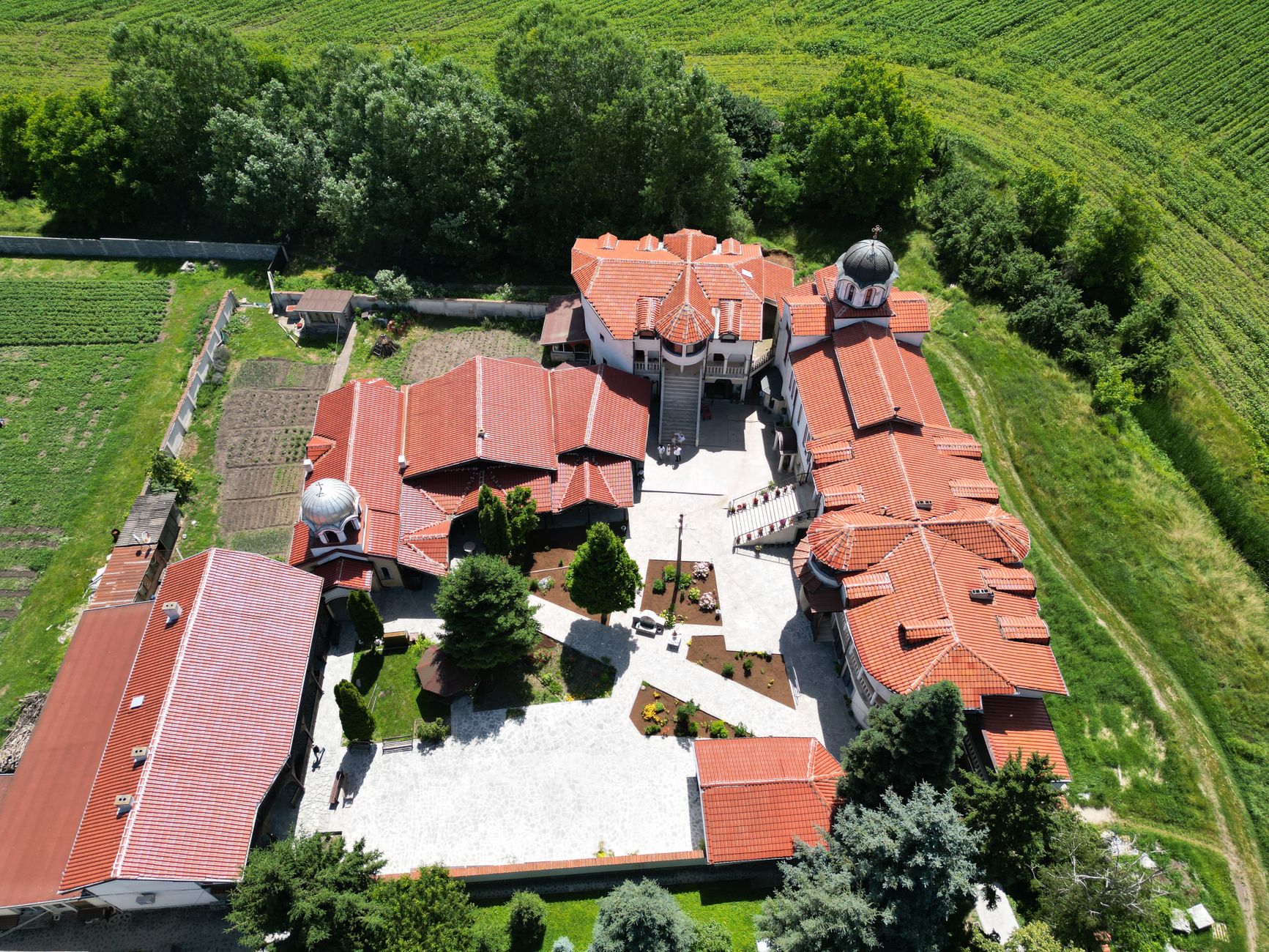
Kremikovtsi Monastery of St. George the Victorious sits in a green fold of the Stara Planina foothills, just far enough from Sofia to feel rural but close enough to reach by city bus. Founded in the 14th century, destroyed by the Ottomans in 1382, and rebuilt in 1493 by a wealthy Sofia citizen named Radivoy in memory of his two young children who had died of plague, the small stone church contains one of the most complete and best-preserved late 15th-century fresco cycles in Bulgaria. Donor portraits of Radivoy, his wife Vidoslava and their two dead children are on the north wall.
The monastery compound is larger than Dragalevtsi's — three quadrangles, a bell tower, gardens of pear and cherry trees, and a modern 19th-century church alongside the medieval one. The old church is the reason to come: barely 12 metres long, dark inside, and covered from floor to dome in original 1493 painting. Look for the scene of St. George slaying the dragon on the south wall, and the touching portrait of the two children in their small ceremonial robes on the north. Nuns live in the compound and one usually opens the medieval church on request.
It takes some effort to reach — bus 117 from the Iztochna kapiya bus terminus on the eastern edge of Sofia, about 45 minutes total from the centre. Come on a Saturday when Bulgarian families arrive with picnics, or a weekday for solitude. Combine with a walk in the surrounding hills or a stop at Kremikovtsi village. Not a place for people short on time, but if you want to see the finest Bulgarian medieval painting outside Boyana with no crowd and no ticket, this is it.
Inside the old church, give your eyes two or three full minutes before you judge anything. It is a single-nave, barrel-vaulted box with a low narthex, no electric lighting worth the name, and five centuries of candle soot on the upper registers. Work bottom to top: standing warrior saints and full-length figures at eye level, Gospel scenes and Passion episodes above them, and the ktitor inscription naming Radivoy and the year 1493 near the entrance. The paint is thin in places and scratched at knee height where generations have touched it. Twenty minutes standing still in there is worth more than an hour of walking the grounds. The 19th-century church next door is bigger, brighter and entirely ordinary by comparison — five minutes is honest, then go back outside and walk the three courtyards and the fruit gardens instead.
Getting here is the whole problem and there is no elegant fix. Bus 117 is the only public link, and it leaves from the Iztochna kapiya terminus at the far eastern end of Botevgradsko shose, so you first need 25-30 minutes of city transport just to reach the starting line, then about 30 minutes on the 117, then a 10-minute walk uphill from the village stop. Drivers have it easier: head east on Botevgradsko shose, turn north on the Botunets and Kremikovtsi road, roughly 20 km and 35 minutes from the centre, with free informal parking on the lane outside the walls. A taxi costs about €12-15 one way; if you take one, book the return through the TaxiMe app before you lose signal in the courtyard rather than hoping one passes.
Nothing here costs anything. There is no ticket desk, no guide fee, no photography charge and no combined ticket with anything else — a donation box stands near the old church door, a candle runs about €0.30, and the box takes cash only because there is no card terminal in the compound. Sofia public transport is the only real outlay: a single ride is roughly €0.80 and a day card about €2, which pays for itself the moment you use two vehicles each way. Budget €4 for transport, €2 for candles and a donation, and the price of whatever you carry in to eat. If you were choosing between this and Boyana Church, note Boyana charges around €5 for a strictly timed 10-minute visit; here you can stand in front of the frescoes as long as you like.
Aim for a weekday between 9:30 and 11:30. That is when a nun is most likely to be in the courtyard to unlock the old church, and when the light through the small windows is at its most useful. Sunday mornings there is liturgy in the newer church, which occupies the community and makes fresco viewing awkward; Saturdays bring Sofia families with picnic bags to the grass outside the walls, which is pleasant if you want company. Skip 6 May entirely unless crowds are the point — it is the patronal feast of St. George and the compound fills. Late April to mid-June is the best window, with the pear and cherry trees in blossom; October gives colour on the hills. December and January are grim: the unheated church is freezing, dark by 16:30, and most likely locked.
Families do well here — the grass outside the walls is made for a picnic, children can roam the courtyards, and nobody minds noise. Teenagers with no interest in medieval painting will be finished in fifteen minutes, so pair the visit with a walk into the hills above the village rather than the monastery alone. Wheelchair users should be honest about it: gravel courtyards, a step into the old church and no adapted toilet make this a hard trip. Anyone with a one-hour gap before a train or flight should skip it outright and see a central church instead. If you have half a day and a car, add Buhovo Monastery of St. Mary Magdalene about 5 km northeast or Seslavtsi Monastery a similar distance west, both part of the ring of Sofia Holy Mountain foundations; Kremikovtsi village itself is a 10-minute walk downhill for a shop and a bench.
The honest caveats matter here more than at ticketed sites. The old church is frequently locked and there is no one whose job it is to open it, so a bad-luck visit means looking at a shut door and a courtyard — always ask, politely, and be prepared to leave disappointed. There are no labels, no leaflet and no guide, so anything you want to understand you must read before you arrive. The drive in passes the slag heaps and skeletal halls of the derelict Kremikovtsi steel works, and the valley is quieter than it is pretty. Writers who bill this as Boyana without the crowds oversell it: Boyana's painting is finer and properly lit, and Kremikovtsi's charm is the donor family, the silence and the free access. Come for those three things and the trip pays back.
Hours & entry
Always free
Daily 8:00-17:00
What to see
1493 fresco of St. George slaying the dragon — South wall of the old church
Donor family portrait with two dead children — North wall of the old church, lower register
Original carved iconostasis — Eastern wall of the old church
Tips from the ground
Ask the nun in the courtyard to unlock the old church if the door is shut — she will if you look interested.
Bus 117 runs about every 30 minutes; check return times before you go so you are not stranded.
Bring a picnic — the grassy area outside the walls is set up for it, and there is nowhere to eat inside.
Questions, answered
Entry cost?
Free. Donations for the old church restoration are welcome. There is no ticket desk, no guide fee and no charge for photography, though you should ask before pointing a camera at the frescoes and never use flash. A candle costs about €0.30 and the donation box near the old church door takes cash only — no card terminal exists anywhere in the compound, so bring small notes and coins with you rather than expecting to pay on arrival.
Free days?
Always free. There is no high-season price, no group rate and no combined ticket with any other monastery or museum in the Sofia Holy Mountain ring. The one thing money cannot buy here is access: the medieval church is opened by whichever nun is available, so a free visit can still end at a locked door. For comparison, Boyana Church charges around €5 for a timed 10-minute slot; at Kremikovtsi you can stand in front of the 1493 painting as long as you like.
Time needed?
1-2 hours including transport time from central Sofia. On site, count 20-30 minutes inside the old church once your eyes adjust, five minutes in the 19th-century church, and 20-30 minutes on the courtyards, bell tower and fruit gardens. Add the journey and the realistic door-to-door figure is 2.5 hours by car and closer to 3.5 hours by bus 117. With a picnic on the grass outside the walls, most visitors make an easy half-day of it.
Closed days?
Open every day, though the old church may be locked when a nun is not around. Posted hours are 8:00-17:00, but in December and January the interior is effectively unusable after about 15:00 because there is no meaningful lighting and no heating. Sunday morning liturgy in the newer church makes fresco viewing awkward, and 6 May, the feast of St. George, packs the compound with worshippers. A weekday arrival between 9:30 and 11:30 is the reliable window.
Booking?
No. Nothing is reservable and nobody sells guided tours on site, so turn up and ask in the courtyard. Groups of more than about ten should phone the monastery ahead out of courtesy, since one nun unlocking a 12-metre church for a coach party is not a smooth arrangement. Because there are no labels, no leaflet and no audio guide, read about Radivoy, Vidoslava and the 1493 donor portraits before you leave the city — that is the only preparation the visit needs.
How to get there?
Bus 117 from Iztochna kapiya terminus on the eastern edge of Sofia — 30 minutes ride, then 10 minutes walk. Allow another 25-30 minutes of city transport to reach that terminus; a single ride is about €0.80 and a day card about €2. The 117 runs roughly every 30 minutes and stops early in the evening, so photograph the return times at the stop. Driving takes 35 minutes east on Botevgradsko shose via Botunets, about 20 km, with free parking outside the walls; a taxi is €12-15 each way.
Doing good is the business: every booking through Stay Sofia funds one verified tonne of carbon removal — same room, same price, no markup.
Start your search