Museums
National History Museum
Bulgaria's largest museum, housed in Todor Zhivkov's former Communist residence, holding 700,000 objects from prehistory to the fall of the Soviet Bloc.
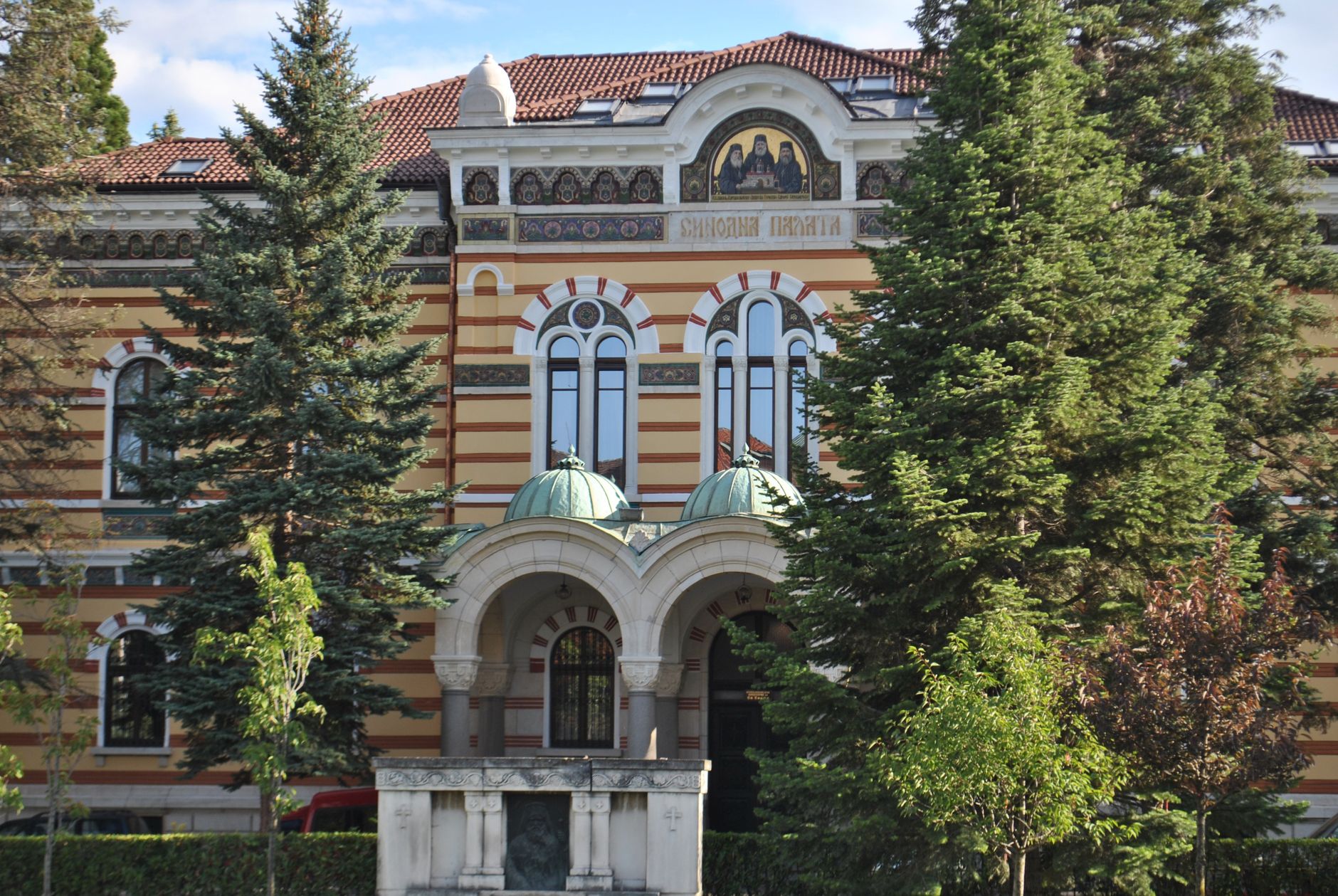
The National Museum of History moved in 2000 into the massive marble Boyana Residence, once the private hunting palace of Communist leader Todor Zhivkov, at the foot of Vitosha. The building itself is worth the ticket — endless corridors of polished travertine, the vast entrance hall where Zhivkov once received Brezhnev and Ceaușescu, and a park of pine trees behind. The collection covers 8,000 years: prehistoric Thracian gold, Roman Serdica, medieval Bulgarian tsars, Ottoman rule, the National Revival, the two world wars, and Communism.
The star exhibits sit in a single high-security hall on the ground floor: the Panagyurishte gold treasure, a set of nine Thracian ceremonial vessels from around 300 BC weighing 6.1 kilograms of solid gold; the Valchitran treasure, a 12.4-kilogram gold set from the 15th century BC; and the Rogozen silver treasure of 165 vessels. Upstairs, room after room chronicles the Bulgarian medieval empires and the National Revival — folk costumes, Cyrillic manuscripts, painted ceilings from vanished monasteries. The Communist section, discreetly tucked at the back, includes Zhivkov's personal desk and gifts from other socialist leaders.
This museum is on the same road as Boyana Church, so combine them; a joint ticket is €11 instead of €14 separately. Come on the last Monday of the month for free entry. Allow 2-3 hours minimum. English labelling is patchy but adequate; an audio guide is €3. The museum is 8 km from central Sofia; bus 63 or 111 from Hladilnika metro terminus takes 25 minutes. The park behind the building is free to wander and has views back over Sofia.
The route through the building is not signposted with much conviction, so it pays to know the plan before you start. Tickets are sold in the marble lobby, the treasury hall opens off the ground floor, and every group that arrives heads straight for it — which is the argument for doing the museum backwards. Go upstairs first: the prehistory rooms with their Neolithic figurines and pottery, the halls of ancient Thrace, then the medieval floor with chain mail, royal seals, Cyrillic manuscripts and icons carried down from monasteries that no longer stand. The National Revival rooms follow, with looms, guild tools, embroidered costumes and the banners of the 1876 April Uprising, and the twentieth-century halls run from the Balkan Wars through the royal court of Ferdinand and Boris III to the socialist decades. Come down to the gold last, when the coaches have gone, and give it a full half hour.
From the centre, take metro line M2 south to Vitosha, the terminus, then walk five minutes to the Hladilnika bus terminal and pick up bus 63 or 111. The ride out through Boyana takes about 25 minutes, with departures every 15 to 20 minutes through the day; a single ticket is around €0.80 from the machine or by contactless card, and a day pass costs about €2 if you are also riding the metro. Get off at the residence stop — the marble bulk of the building is unmistakable from the road. A taxi from Sveta Nedelya square is roughly €6 to €9 and takes 20 to 25 minutes via Bulgaria Boulevard; book by app rather than accepting a driver who approaches you. Drivers have a free car park at the gate. The efficient plan is bus out at opening, walk up to Boyana Church, taxi back.
Entry is €4 for adults and €2 for students, and if you are doing the church as well the €11 combined ticket is the only version worth buying. The free last Monday of the month waives the museum fee but not the church, so budget for that separately. The audio guide at €3 earns its keep in the treasury hall, where the labels give dates and weights but not the story; upstairs it adds little and most people stop listening. A guided tour in English has to be arranged in advance and costs several times the ticket, which makes sense for a group of eight and not for a couple. The desk takes cards. The shop, selling replicas of the Panagyurishte rhyta and English-language histories, is one of the better museum shops in the city; the cafe, as noted above, is not.
The first hour after opening is the quiet one — 9:30 from April to October, 9:00 from November to March. Organised groups combining Boyana Church with the museum land between 10:30 and 13:00, and the treasury hall is where the bottleneck forms, since everyone stands at the same three cases. After 15:30 the building empties again, but last entry is 30 minutes before closing and the guards start moving people along well before that. The free last Monday brings local families and school parties: worth it, but only if you are at the door at opening. May, June and September are the best months, when the park behind is usable and Vitosha is green; in January and February the approach is snowy and the buses slower, though the heated marble halls make this the strongest wet-weather plan in Sofia.
It suits anyone who wants the long arc of Bulgarian history in one building, and it rewards a rainy or freezing afternoon better than almost anything in the city. Children over about eight do well on the gold, the armour and the socialist-era oddities; the textile and manuscript rooms lose them fast, so let them run the pine park afterwards. Teenagers who shrug at icons often perk up in the Zhivkov wing. Getting into the building involves steps from the car park, and the exhibition is spread over more than one floor — if step-free access matters, ask staff at the entrance for the level route before you buy. Skip it entirely if you have only an hour before a train: the round trip is close to two hours on its own, and the National Archaeological Museum in the centre gives you Thracian and Roman material within walking distance of Serdika metro.
Boyana Church is the obvious pairing, about 15 minutes uphill on foot; its 1259 frescoes are the reason to come, but only ten people enter at a time for around ten minutes, so expect the wait to be there rather than here. Boyana village itself has proper mehanas — Boyansko Hanche among them — where lunch costs less than a coffee at the museum. Walkers can carry on to the marked path for Boyana Waterfall, roughly an hour and a half to two hours up through the beech forest, or take the road higher to the Kopitoto viewpoint over the city. Two honest caveats: only a sliver of those 700,000 objects is on display, and star pieces occasionally travel to exhibitions abroad. Anyone staying out here — Casa Boyana Boutique Hotel or Hotel Villa Boyana — can do the whole cluster before lunch.
Hours & entry
Last Monday of the month free
Apr-Oct daily 9:30-18:00 · Nov-Mar daily 9:00-17:30 · Last entry 30 min before closing
What to see
Panagyurishte gold Thracian treasure — Ground floor treasury hall, main case
Valchitran Bronze-Age gold set — Same ground floor treasury hall, left of Panagyurishte
Todor Zhivkov's ceremonial reception room — Ground floor east wing, entrance atrium
Tips from the ground
Last Monday of the month is free — arrive at 9:30 opening to avoid the local crowd.
Buy the combined ticket with Boyana Church for €11 (saves €3).
The cafe inside is overpriced; walk 15 minutes uphill to Boyana village for lunch.
Questions, answered
How much is the ticket?
€4 for adults, €2 for students. Combined with Boyana Church €11. The desk takes cards as well as cash, so there is no need to hunt for an ATM out in Boyana. An audio guide adds €3 and is worth it only for the treasury hall. An English-language guided tour must be arranged in advance and costs several times the entry. Add about €0.80 each way for bus 63 or 111; two adults doing both sights with transport come to roughly €25 for the half-day.
When is free entry?
Last Monday of every month. It is also the busiest day of the month, with school groups and local families arriving in waves from mid-morning, and the queue forms at the three cases in the treasury hall rather than at the door. Be there for opening — 9:30 from April to October, 9:00 from November to March — and you will have the gold nearly to yourself for twenty minutes. Note that the free day covers the museum only; Boyana Church still charges, so the combined ticket logic does not apply.
How long to visit?
2-3 hours to cover the main halls. Full visit is 4 hours. Budget roughly 30 to 40 minutes in the treasury hall, an hour for the medieval and National Revival floors, half an hour for the twentieth-century and Communist rooms, and 20 minutes in the pine park behind for the view back over Sofia. Add about 50 minutes of travel each way from the centre, which makes it a half-day whatever you do. With under two hours, do the treasury and Zhivkov's reception atrium and leave the upper floor.
Closed days?
Open every day. Hours are 9:30-18:00 from April to October and 9:00-17:30 from November to March, with last entry 30 minutes before closing and the ticket desk shutting at the same moment — arriving at 17:45 in summer gets you a rushed lap, not a visit. Individual halls occasionally close for re-hanging, and headline pieces sometimes travel to exhibitions abroad, so the odd case may hold a replica or a note. The park behind the building stays open and costs nothing.
Booking?
None needed for individuals; groups over 20 should call ahead. There are no timed slots and no online queue — you simply walk up to the desk in the marble lobby and pay. Guided tours in English are the exception and should be arranged a few days in advance. If you are pairing the museum with Boyana Church, buy the €11 combined ticket at the museum desk before walking up, and remember the church admits ten visitors at a time for about ten minutes, which is where any waiting happens.
How to get there?
Metro M2 to Vitosha, then bus 63 or 111 from Hladilnika terminus to the museum stop. The walk from the metro to the bus terminal is about five minutes, the ride is roughly 25 minutes, buses run every 15 to 20 minutes, and a single ticket costs around €0.80 by contactless card or machine. A taxi from Sveta Nedelya square is €6 to €9 and 20 to 25 minutes. Drivers park free at the gate. Check the return timetable at the stop rather than assuming late buses.
Doing good is the business: every booking through Stay Sofia funds one verified tonne of carbon removal — same room, same price, no markup.
Start your search