Museums
Sofia History Museum (Central Mineral Baths)
The story of Sofia across 8,000 years, told inside the beautifully restored 1913 Central Mineral Baths.
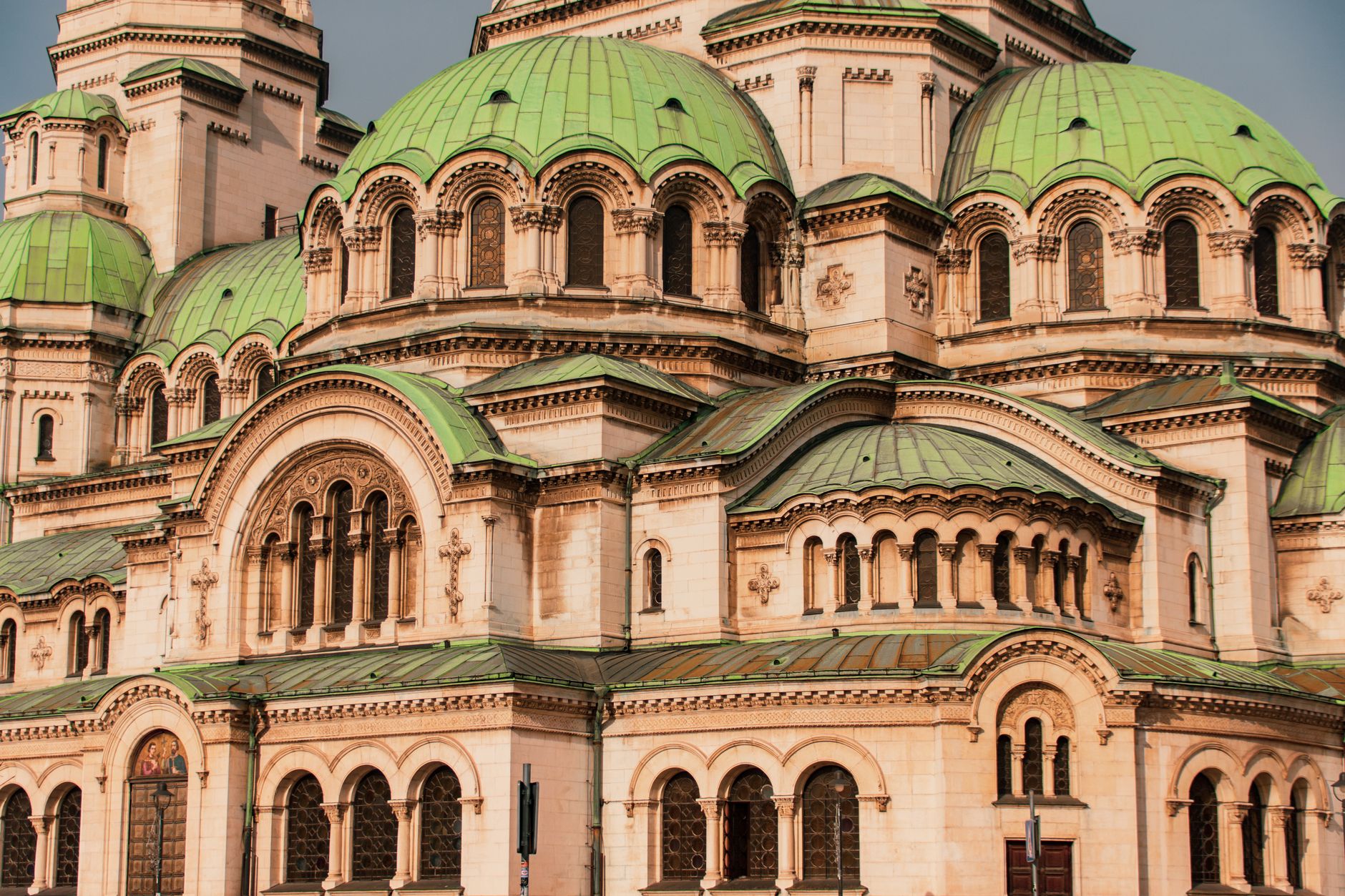
The Sofia History Museum reopened in 2015 inside one of the most beautiful buildings in the city — the 1913 Central Mineral Baths, a Vienna Secession masterpiece of yellow, red and white ceramic tiles designed by architect Petko Momchilov. The building operated as public thermal baths until 1986; the mineral water still runs from a row of hot public taps in the small park outside (free, safe, slightly sulphurous). Inside, the seven exhibition halls trace Sofia's history from prehistoric settlements through Roman Serdica, medieval Sredets, Ottoman Sofia, Bulgarian Revival, and the 20th century.
The star of the collection is the gilded carriage of Sofia's first mayor after Liberation, Dimitar Petkov, kept in the central hall under the great dome. Also here: the throne of Bulgarian tsars restored after 1878, medieval Sredets pottery excavated from the Serdika archaeological complex around the corner, and a full room on the 1925 Sveta Nedelya bombing. The building itself is the exhibit — the ceramic staircase, the domed central atrium, the restored bathroom cabins on the ground floor — as much as anything inside.
This is the compact history museum for people who found the National History Museum too big. 90 minutes is enough. Combine with the mineral drinking fountains in the park outside (bring a bottle), the mosque and the synagogue for a five-building loop around Serdika. Come Thursday morning of the first week for free entry. English labelling is good throughout. The museum shop sells excellent Sofia-themed books and prints in the €9-€17 range.
The route is simple enough to leave the floor plan in your pocket. Buy the ticket in the vestibule, turn into the ground-floor west wing and start with the restored bathing cabins — marble slabs, brass fittings, drainage channels, original wall tiling — the only place in the building where you physically understand what a Saturday here felt like before 1986. The ceramic staircase then climbs to the domed atrium and the carriage, and the chronological rooms run in order: prehistory and Thracian Serdica, Roman street grids and inscriptions, medieval Sredets, the Ottoman centuries, the Revival and the post-1878 capital, then the twentieth century and room 6. Settle one thing before you arrive: nobody bathes here. The pools closed in 1986, the east wing is still awaiting its long-promised spa conversion, and the only water you can touch is the drinking taps outside. Do the cabins first — the rest of the museum reads better once you have seen them.
Serdika metro station (M1/M2) is the arrival point, three minutes away on foot: take the exit signed for Banya Bashi Mosque and the Central Market Hall, surface on Knyaginya Maria Luisa Boulevard, and the tiled facade is straight ahead across Banski Square. A single metro or bus ticket costs about €0.80 and a one-day card about €2, so a day card only pays off from three rides. Trams running along Maria Luisa stop beside Halite, one minute from the door. On foot it is roughly 12 minutes north from Vitosha Boulevard through the Largo, 15 minutes from Central Railway Station straight down Maria Luisa, and about 18 minutes from Alexander Nevsky Cathedral. From Sofia Airport the metro reaches Serdika in around 30 minutes for that same €0.80 — take it rather than a €12-€15 taxi. Do not drive: the streets here are one-way, congested and blue-zone metered.
Entry is €3 for adults and €2 for students, with a family ticket at €7 — a rounding error next to the €10-plus you would pay for a comparable city museum in Vienna or Budapest, and the reason nobody should agonise over whether to go in. Pay at the desk in the vestibule; small change speeds things up. There is nothing extra to buy inside: no audio guide charge, no separate photo ticket for ordinary phone shots, no timed supplement for the carriage hall. The museum shop is the only real temptation, with Sofia maps, reprints and photo books at €9-€17. Coffee at the Cinquecento café inside runs about €2 for an espresso, better than most of what Vitosha Boulevard sells. The mineral taps outside cost nothing, and so does the Serdica archaeological complex five minutes away — there is no combined ticket, because that site is free.
Aim for 10:00 on a Tuesday or Wednesday, when the halls are empty and the light through the atrium dome is at its best; by noon at weekends the ground floor carries a steady crowd around the carriage. School groups tend to fill weekday mornings in spring and autumn, so if you hit one, start upstairs and work down. Last entry is 17:30, but arriving after about 16:45 means rushing the twentieth-century rooms — a late-afternoon slot around 16:00 on a Friday is the other quiet window. The first Thursday of the month is genuinely free and genuinely busy: queue on the square from before 10:00 or come after 15:00. Winter is the museum's best season — the interior is warm, the taps outside steam, and the tiled facade looks its best against grey sky. In July and August the thick walls make it a cool hour out of the heat.
Small children do well here for about 40 minutes: the carriage, the bath cabins and the tiled staircase carry them, though there is no play space or hands-on room, so this is not a rainy-day parking spot for a full afternoon. Teenagers usually run through it in under an hour and enjoy the 1925 bombing material most. Wheelchair users can enter step-free from Banski Square and see the ground floor and atrium without difficulty; ask at the desk about the lift before buying if the upper floor matters. It fits neatly into a one-hour gap before a train — Central Railway Station is two metro stops away. Skip it if you came to Bulgaria for Thracian gold, which lives at the National Archaeological Museum and the National History Museum in Boyana, or if you have already spent a morning at Boyana; two big chronologies in one day flattens both.
Everything worth folding in is within a short walk. Banya Bashi Mosque is one minute across the square, the Central Market Hall two minutes over Maria Luisa with a basement food court where lunch runs €5-€8, Sofia Synagogue about five minutes behind it on Ekzarh Yosif, and the sprawling Zhenski Pazar produce market seven minutes north. Southwards, the free open-air Serdica complex and the Largo are five minutes, St Nedelya Cathedral — the building in room 6's bombing story — about eight. Two honest warnings: the mineral taps often have locals filling 20-litre containers, so use the far end of the row rather than waiting behind a full trolley, and the stretch between Halite and Zhenski Pazar attracts pickpockets in the busiest hours. Coverage of the socialist decades is thinner than the earlier rooms; if that is your interest, the Museum of Socialist Art across town is the honest answer.
Hours & entry
First Thursday of the month free
Tue-Sun 10:00-18:00 · Closed Mon · Last entry 17:30
What to see
Gilded mayor's carriage of Dimitar Petkov — Central hall under the main dome, ground floor
Restored bathhouse cabins with original tiles — Ground floor west wing
1925 Sveta Nedelya bombing exhibit — First floor, room 6
Tips from the ground
Free first Thursday of every month — but arrive at 10:00 opening to beat the queue.
Fill a bottle at the mineral water taps outside — hot, safe, and 40°C year-round.
The museum cafe (Cinquecento) has better coffee than most on Vitosha Boulevard, €2 for an espresso.
Questions, answered
Ticket price?
€3 for adults, €2 for students. Family ticket €7. Buy at the desk in the entrance vestibule; there is no online sale and no timed slot, and small change moves the queue faster than a card. Nothing inside costs extra — no audio guide fee, no photo permit for phone shots. Budget about €10 for two adults with a €2 espresso each in the Cinquecento café, more if the shop's Sofia books and prints at €9-€17 catch you on the way out.
Free entry?
First Thursday of every month. It is a real free day, not a discounted one, and the whole city knows: expect a line on Banski Square from just before the 10:00 opening and a busy carriage hall until early afternoon. If you want the building quiet, come after 15:00 that day or pay the €3 on any other Tuesday morning. The mineral water taps outside and the Serdica archaeological complex five minutes south are free every day of the year.
Duration?
1-2 hours. Ninety minutes is the honest average: about 20 minutes on the ground-floor bath cabins and the domed atrium with the carriage, then an hour working up through the chronological rooms to the 1925 Sveta Nedelya display in room 6. A fast pass on the way to a train takes 40 minutes. Add 20 minutes for coffee inside, and another 30 if you walk the Serdika loop past the mosque, Halite and the synagogue afterwards.
Closed?
Closed Mondays. Otherwise Tuesday to Sunday, 10:00-18:00, with last entry at 17:30 — though arriving after about 16:45 means hurrying the twentieth-century rooms. Public holidays can shift the schedule, so check before making a special trip on one. If you land here on a Monday, the square, the mosque exterior and the mineral taps are still there, the Central Market Hall is open two minutes away, and the free open-air Serdica complex by the metro fills the same hour.
Booking?
Not needed. This is a walk-in museum: buy at the desk, walk straight through, no timed entry even on the free first Thursday. Groups of ten or more should contact the museum in advance so the staff can stagger them, and anyone who wants a guided walk-through should arrange it ahead rather than asking on the day. For solo visitors and couples the English labelling is thorough enough that a guide adds little to a 90-minute visit.
Metro?
Serdika (M1/M2), three minutes walk to the building. Use the exit signed for Banya Bashi Mosque and the Central Market Hall, come up on Knyaginya Maria Luisa Boulevard, and the tiled facade faces you across Banski Square. A single ride is about €0.80, a day card about €2. Central Railway Station is two stops away, and the metro runs direct from Sofia Airport to Serdika in roughly 30 minutes — far better value than a €12-€15 taxi into this traffic.
Doing good is the business: every booking through Stay Sofia funds one verified tonne of carbon removal — same room, same price, no markup.
Start your search