
Foothill village with the UNESCO-listed Boyana Church, the National History Museum and quiet lanes 15 minutes from the centre.
Boyana is where old Sofia money moved in the 1990s and 2000s — a leafy village-turned-suburb at the foot of Mount Vitosha, with the 13th-century Boyana Church (UNESCO) and Bulgaria's National History Museum as its main draws. Lanes are narrow, houses are big, walls are high, and everything is 15 to 20 minutes from central Sofia by taxi. The village core around the church has a handful of small restaurants and one very good bakery. By 9am the lanes are quiet enough to hear songbirds from the mountain treeline, and the bakery on Boyansko Ezero sells out of banitsa before ten most weekends.
The streets nearest the mountain, Serdika and Manastirska among them, are lined with embassy residences and consular staff housing, which explains the number of national flags on gateposts and the discreet security cameras on garden walls. After dark the village empties fast — dog-walkers are rare, and by 9pm the loudest sound is usually the stream that runs below Boyansko Ezero. It suits anyone who wants Sofia's museums and Vitosha's trails within a short taxi ride, without the traffic or noise of the centre.
Suits families, culture visitors and anyone who wants a genuinely quiet base within striking distance of the city. Skip it if you want to walk out of the hotel into a bar or a metro — no metro, and the two decent restaurants close at 22:00. Prices for a small hotel or guesthouse are €52 to €95; luxury properties higher. Confirm airport transfer arrangements before arriving — taxis at 06:00 from Boyana can be tricky to hail. Families staying for a week do better here than solo travellers who want nightlife on demand — the closest late bar is in Hladilnika, a 15-minute taxi away.
Spring and early autumn are the best times to stay — the waterfall trail is dry, frescoes viewing slots are easier to get, and hotel rates drop by €10 to €15 a night outside July and August. Winter brings snow to the upper lanes and the odd closure at the church on the coldest days; check ahead if visiting between December and February. Summer is busiest around the museum car park on weekend mornings, but the village itself never feels crowded.
Where to stay in Boyana
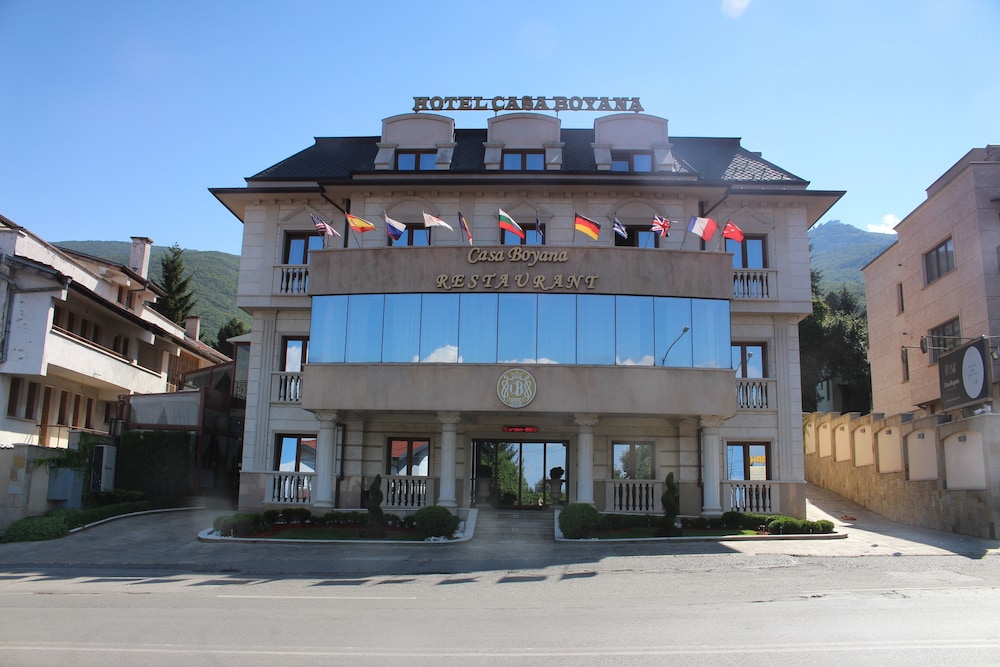
The best hotels are in the core village, streets like Boyansko Ezero, Serdika and Manastirska. Small boutique properties at €61 to €104, family-run guesthouses at €43 to €69. Avoid anything on Kambanite (main road into the village) — traffic in the morning is heavy. Ask about parking (usually free but limited to the property's own gate). The village slopes up towards the mountain — check whether your hotel has a hill walk to the road. Casa Boyana Boutique Hotel and Hotel Villa Boyana are the two properties inside the village core, both a five-minute walk from the church, and both sit at the top of the local price band. Book Casa Boyana for mountain-facing rooms, Hotel Villa Boyana if parking matters more. High season (June to September) adds €10 to €20 a night over the low-season guesthouse rate of around €40.
Hotels in Boyana
Real, top-reviewed rooms — booked at the same live rate through app.impt.io, one verified tonne of carbon removed per stay.

Things to do in Boyana
- Boyana Church UNESCO site13th-century frescoes considered a precursor to European Renaissance painting. Small building, entry €4, timed tickets in summer to protect the frescoes — visits limited to 10 minutes inside. Open 09:00 to 17:30, closed one day varies. Photography forbidden.
- National History Museum of BulgariaHoused in a former state residence, 5 minutes from the church. Bulgaria's largest museum — Thracian gold, medieval icons, communist-era rooms. €5 entry, allow 2 hours. Open 09:30 to 18:00 daily.
- Boyana Waterfall hike90 minutes each way on a marked trail from the church car park. 15-metre waterfall, forested walk, moderate difficulty. Best May to June. Free, always open. Bring water.
- Lunch at VodenitsataBoyansko Ezero 68, in a restored watermill in the village. Traditional Bulgarian dishes, mains €7 to €13, folk dancing on weekend evenings 20:00. Open 12:00 to 23:00. Reservations required Friday and Saturday.
- Boyana Film Studios exteriorOn the approach road, Kambanite, the working studio complex where much of Bulgaria's state-era cinema was shot; no public tours, but the gatehouse and preserved outdoor sets are visible from the street. A five-minute detour on the way in or out of the village, free, best combined with the church visit.
- Banitsa and coffee at the village bakeryOn Boyansko Ezero near the church turn-off, the only bakery in Boyana and worth timing a visit around before the tour groups arrive — banitsa, boza and coffee for under €3, sells out most weekend mornings by 10:00. Open 07:00 to 19:00, cash preferred.
Getting around & the essentials
No metro. Bus 64 from Hladilnika (near the M2 metro terminus at Vitosha) runs to Boyana in 15 minutes for €1. Bus 107 also serves the village. Taxi from central Sofia is €5 to €8, from the airport €16 to €22. Inside Boyana walking is fine but the village is on a slope — allow extra time up. Book a taxi ahead for early departures rather than trying to hail on the street. From Sofia Airport, take the M1 metro line to Serdika then change to M2 towards Vitosha, get off at Hladilnika and pick up bus 64 or a taxi for the last stretch.
Church to Museum to Waterfall Trailhead. Start at Boyana Church, walk 5 minutes to the National History Museum, then back through the village to the waterfall trailhead at the top of Boyansko Ezero. Do the full waterfall hike if time allows (3 hours round trip) or turn back at the forest edge for a shorter walk. Coffee at Vodenitsata on the way back. Total distance is roughly 4km without the waterfall detour, closer to 10km with it, all on paved lanes until the forest starts.
Boyana, questions answered
Do I need to book Boyana Church tickets in advance?
In summer high season yes — visits are limited to 10 minutes inside and slots fill up. Book online through the museum website or arrive at opening (09:00) to secure a same-day slot. Off-season you can usually walk up.
Is Boyana a good base for hiking Vitosha?
Yes for the Boyana waterfall side of the mountain and for lower forest trails. For higher-altitude routes to Cherni Vrah, Simeonovo or Dragalevtsi are closer to the cable cars — Boyana requires an additional bus or taxi ride to reach those trailheads.
How much time do I need for Boyana Church and the museum?
Allow about 30 minutes for Boyana Church itself, since visits are capped at 10 minutes inside and the rest is queueing and the short walk from the car park. The National History Museum needs closer to two hours if you want to see the Thracian gold and the icon rooms properly. Combined, budget half a day including lunch in the village. Most visitors do both on the same trip since they are five minutes apart on foot.
Can I visit Boyana without a car?
Yes — bus 64 from Hladilnika, at the end of the M2 metro line, reaches the village in about 15 minutes for €1. Bus 107 is a second option covering the same route. Taxis and ride-hailing apps work well for the return leg, especially after dark when buses thin out. Walking around the village itself needs no car at all, though the slope up from Kambanite is a factor for anyone with luggage.
Nearby districts
Doing good is the business: every booking through Stay Sofia funds one verified tonne of carbon removal — same room, same price, no markup.
Start your search